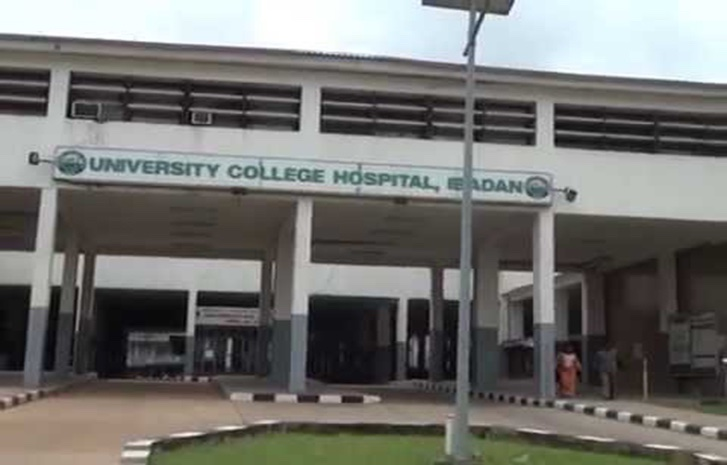
Prof. Abiodun Otegbayo, the Chief Medical Director (CMD), University College Hospital (UCH), Ibadan, has attributed migration of skilled health workers to the slow progress of effective digitalisation of medical operations in public hospitals.
Otegbayo said this in an interview with the News Agency of Nigeria (NAN) in Ibadan on Sunday while speaking on challenges confronting the implementation of Electronic Medical Records (EMR) and other digital healthcare systems.
According to him, hospitals invest resources in training personnel on digital systems only to lose them shortly afterwards to opportunities abroad.
“One of the things we have observed in the health sector is the issue of human capital loss, what people refer to as ‘japa’.
“If you train somebody today, in two months’ time, the person may leave and you have to start training another person again,” he said.
The CMD said that the situation had made it necessary for the hospital to continuously train large numbers of staff to sustain ongoing digitalisation efforts.
He explained that UCH was currently training “super users” across departments, including doctors, nurses, pharmacists and laboratory scientists, who would in turn train others within the system.
According to him, the hospital is gradually transitioning from paper-based operations to a hybrid system combining manual and electronic medical processes.
Otegbayo said the hospital had recently engaged a new Electronic Medical Records (EMR) service provider following the disengagement of a previous provider in November 2025.
“We are trying to expand the electronic medical records system gradually across departments.
“But sustaining trained manpower remains a challenge because of staff migration,” he said.
The CMD identified other obstacles affecting digital transformation in public hospitals to include unstable electricity supply, poor internet connectivity and inadequate funding.
He said that in spite of the challenges, digital systems remained critical to improving efficiency in healthcare delivery.
“With electronic medical records, patient information can be accessed faster, missing files can be reduced and waiting time will also reduce significantly,” he said.
Otegbayo added that some units within the hospital, including the General Outpatient Department (GOPD), radiology department and the universal laboratory, had already introduced partial digital operations.
He explained that digital systems also improve communication between departments and support continuity of patient care.
“In advanced healthcare systems, hospitals are interconnected and patient records can be accessed electronically from different locations.
“That is where we need to get to in Nigeria,” he said.
Meanwhile, UCH has commenced additional staff training on digital healthcare operations as part of efforts to strengthen internal capacity.
According to him, the recent training programme on Digital Queue Management System (DQMS) was organised for staff of the General Outpatient Department and Staff Clinic to improve patient flow and reduce waiting time.
Otegbayo described the training as part of the hospital’s broader commitment to gradual digital transformation despite operational challenges.
He stressed that government support, sustained investment and manpower retention would be crucial to achieving effective digital healthcare systems in Nigeria.