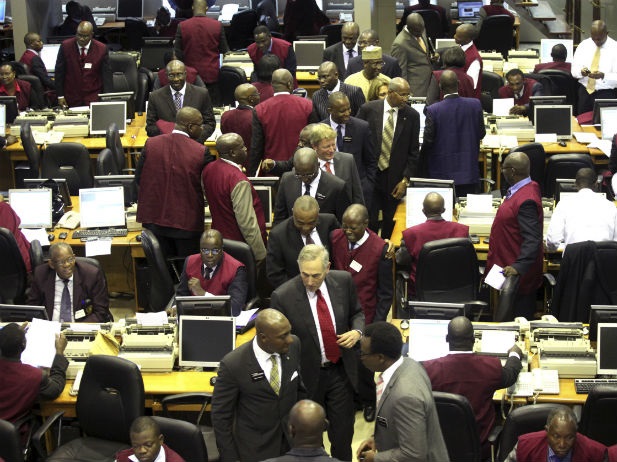
Nigeria’s stock market is expected to remain resilient in the face of rising tensions between the United States, Israel and Iran, a leading financial expert has said.
Uche Uwaleke, President of the Capital Market Academics of Nigeria, stated in Abuja on Wednesday that the market’s domestic investor base provides a strong buffer against external shocks.
He explained that the predominance of local investors helped insulate the market during the first quarter, despite heightened geopolitical uncertainty in the Middle East.
Uwaleke projected a positive outlook for the remainder of 2026, supported by structural developments such as banking sector recapitalisation and the expected listing of the Dangote Refinery.
According to him, the banking sector—particularly Tier-1 banks—will continue to play a central role in driving market performance, buoyed by strong earnings expectations.
He added that consumer goods and industrial firms are also well positioned to benefit from improved foreign exchange access and greater cost stability.
Energy stocks, he noted, are likely to gain traction as investors anticipate the refinery’s entry into the market, which could significantly boost liquidity and investor interest.
Uwaleke further observed that retail investors are increasingly drawn to companies with strong fundamentals, reliable dividends and clear growth potential, with digital trading platforms making such investments more accessible.
Reviewing first quarter performance, he attributed market gains to improving economic fundamentals, policy consistency and rising investor confidence.
Reforms by the Central Bank of Nigeria, particularly in foreign exchange management, have contributed to currency stability and easing inflation, while external reserves—now करीब 50 billion dollars—have reinforced confidence in the economy.
Despite the positive outlook, he warned of potential risks, including investor profit-taking, possible tightening of monetary policy and global economic uncertainties.
On the planned introduction of a T+1 settlement cycle by 29 May, Uwaleke said the market is adequately prepared, noting ongoing investments in infrastructure and capacity building among market participants.
He concluded that although some initial adjustments may be required, the system is sufficiently robust to ensure a smooth transition.