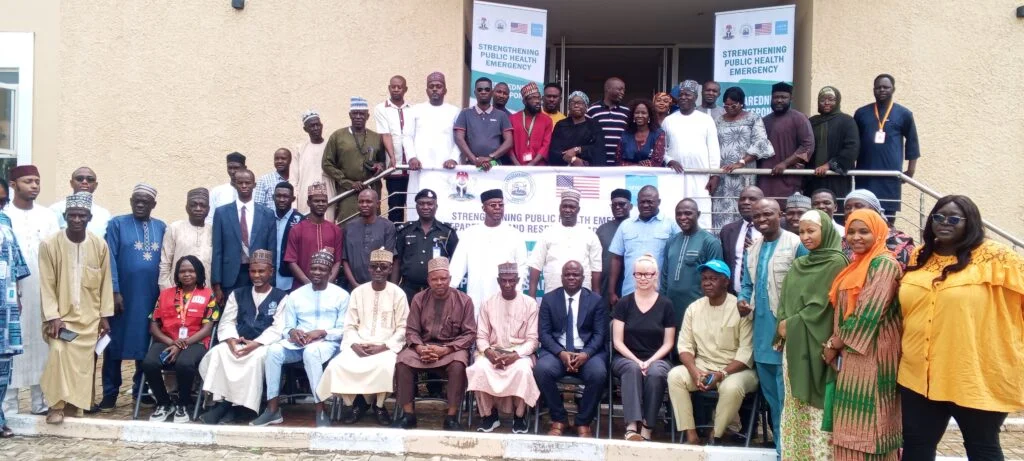
The United Nations Children’s Fund (UNICEF), with funding support from the United States, has reaffirmed its commitment to strengthening public health emergency preparedness and response systems in Adamawa.
Dr Abe Egbe, Public Health Emergency Specialist at UNICEF, Abuja, said this on Tuesday in Yola during a Multi-Hazard Risk Assessment and Development of Emergency Preparedness and Response Plan meeting.
Egbe said the exercise was designed to support Adamawa in developing a framework for identifying and managing recurring hazards, including floods, cholera, meningitis and diphtheria outbreaks affecting communities.
According to him, the document will enable the state government to anticipate risks, improve planning and implement timely interventions aimed at reducing preventable illnesses, deaths and public health emergencies.
“These will help the Adamawa government to plan for the appropriate response that will be needed to mitigate people dying unnecessarily as a result of hazards in the state,” he said.
Mr Anwar Abubakar, Senior Emergency Preparedness and Response Officer at the Nigeria Centre for Disease Control (NCDC), said the exercise would identify, describe and prioritise hazards capable of triggering emergencies.
He said the assessment would also evaluate Adamawa’s capacity to manage multiple emergencies simultaneously, including available infrastructure, human resources and the functionality of existing health systems.
“Assess Adamawa capacity to manage concurrent emergencies, including infrastructure, human resources, and system functionality. Develop and institutionalise seasonal calendars, risk matrices and all-hazard databases to guide preparedness,” he said.
Abubakar added that the exercise would establish governance, coordination and accountability mechanisms for implementing the Multi-Hazard Risk Assessment framework and ensuring periodic reviews of preparedness strategies.
In his remarks, the Adamawa Commissioner for Health and Human Capital Development, Mr Mohammed Chubado, appreciated the Federal Government, UNICEF and development partners for supporting public health advancement.
Chubado, represented by the ministry’s Permanent Secretary, Mr Zira Bubanani, said recommendations from the exercise would strengthen evidence-based decision-making and enhance health security across the state.
He encouraged participants to contribute actively and develop practical, sustainable recommendations capable of safeguarding communities, improving resilience and strengthening the overall capacity of the health system.
Mr Kadabiyu Jones, the State Epidemiologist, said the document would provide a clearer understanding of risks facing the state and guide authorities in implementing appropriate mitigation measures.
According to him, successful implementation of the recommendations would help reduce mortality associated with recurring hazards and improve emergency response outcomes across Adamawa.