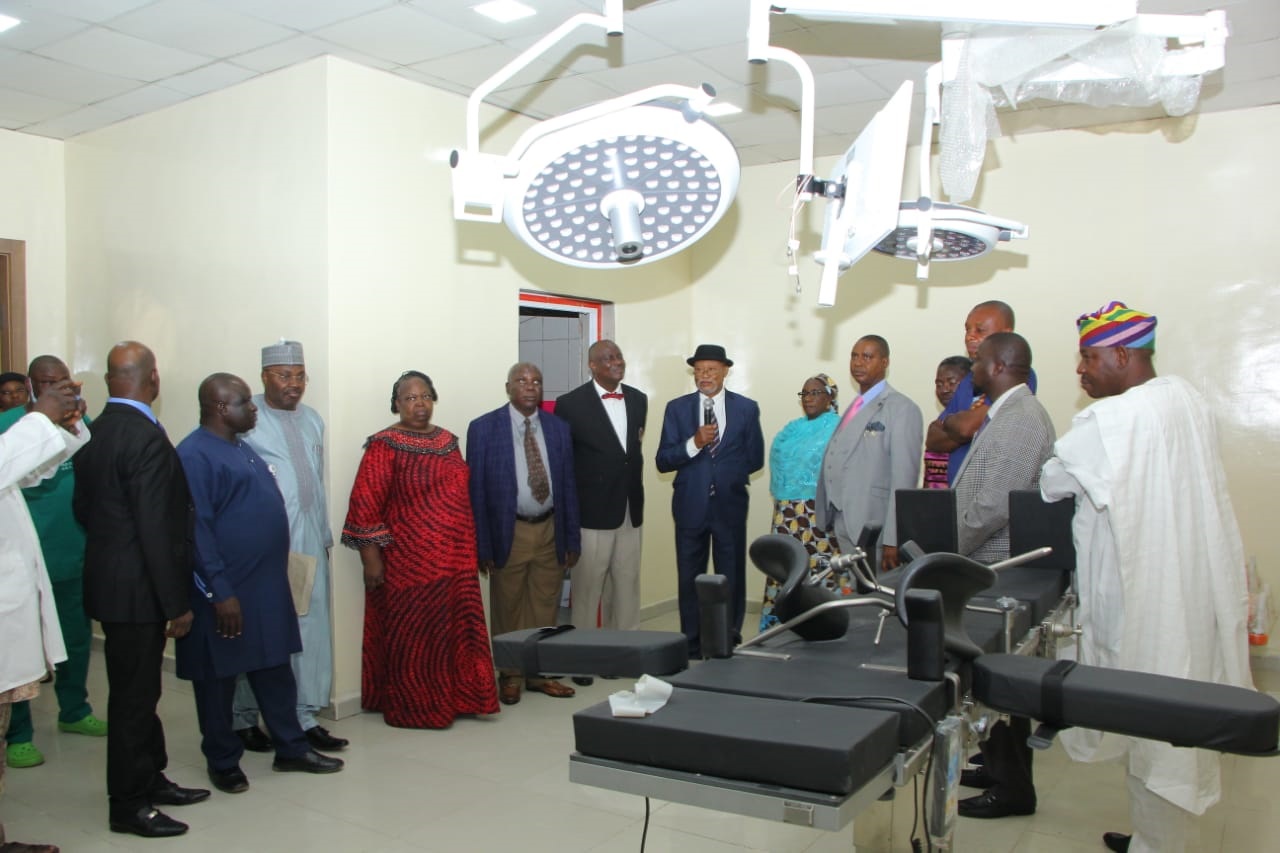
The Chief Medical Director (CMD) of Barau Dikko Teaching Hospital, Kaduna, Prof. Abdulkadir Musa-Tabari, has highlighted the achievements and transformations recorded in the institution since its conversion from a specialist hospital.
Addressing journalists at the hospital in Kaduna, Musa-Tabari said the hospital, which began as a nursing home established by colonial authorities in 1930, has evolved into one of the leading tertiary healthcare institutions in Northern Nigeria.
According to him, the hospital’s transformation gained momentum following its designation as a teaching hospital for Kaduna State University and the enactment of the law establishing it as Barau Dikko Teaching Hospital in 2015.
He explained that the institution was assigned four core mandates: teaching, healthcare service delivery, research, and partnership for health.
Musa-Tabari said one of the major milestones achieved under his administration was the restructuring of the hospital into specialised academic and clinical departments to meet the standards of a modern teaching hospital.
He noted that the hospital now operates more than 20 clinical departments, including Internal Medicine, Surgery, Paediatrics, Radiology, Community Medicine and Public Health, as well as specialized laboratory units such as Medical Microbiology and Parasitology, Blood Transfusion Services, Histopathology and Forensic Medicine, and Chemical Pathology and Immunology.
The CMD added that substantial improvements have also been made in diagnostic and clinical services through the acquisition of advanced medical equipment and the introduction of modern healthcare technologies.
He said services previously unavailable at the hospital are now accessible, while several laboratory procedures that were once conducted manually have been automated to improve efficiency and accuracy.
Tabari disclosed that the hospital has introduced advanced imaging services, including CT scans, MRI, fluoroscopy, and Transcranial Doppler imaging for the management of children living with sickle cell disease.
According to him, the institution has also expanded its bed capacity from 170 to approximately 250 beds to accommodate the increasing number of patients seeking medical attention.
On medical education, the CMD said the hospital continues to play a critical role in training undergraduate, graduate and postgraduate healthcare professionals.
He explained that the institution serves as the primary teaching hospital for Kaduna State University’s College of Medicine and collaborates with other universities in the training of medical students.
Tabari further stated that the hospital has secured accreditation from relevant professional bodies to conduct internship programmes for doctors, pharmacists, nurses, medical laboratory scientists and other healthcare professionals.
The accrediting bodies include the Medical and Dental Council of Nigeria, the Medical Laboratory Science Council of Nigeria, the Nursing and Midwifery Council of Nigeria, and the Pharmaceutical Council of Nigeria.
He emphasised that the internship programmes provide graduates with practical hands-on experience under the supervision of senior professionals, thereby preparing them for independent practice.
He reaffirmed the hospital’s commitment to improving healthcare delivery, advancing medical education and research, and strengthening partnerships aimed at enhancing the health and wellbeing of the people of Kaduna State and the country at large.