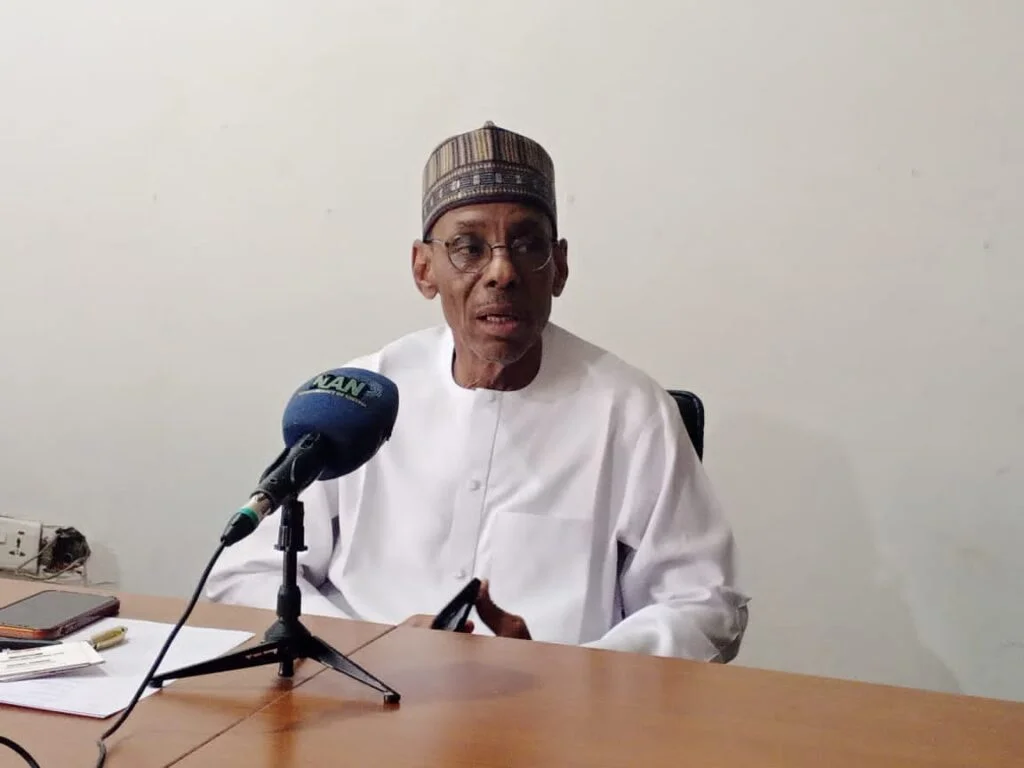
Prof. Pat Utomi, a political economist on Wednesday advised Nigerians to hold their leaders accountable in order to strengthen democracy.
Utomi gave the advice in an interview in with News Agency of Nigeria (NAN) in Lagos.
He was reacting to the gale of political defections ahead of the 2027 general elections.
Utomi said that most political parties in the country lacked clear ideologies, which, he said, was not good for democracy.
“There are no political parties in Nigeria, What we have is machine politics and the process is about cranking up the machine “he said.
According to him, the absence of ideology-driven parties has weakened accountability and disconnected governance from the needs and aspirations of citizens.
He urged Nigerians to
reclaim democracy by asserting their rights, demanding accountability and realigning governance.
“Democracy has so far failed to deliver progress because the process was hijacked by people with little care or competence to focus on the pains of the people.
“So, practitioners sit Abraham Lincoln on his head by making it a government of politicians by politicians for politicians, instead of government of the people for the people by the people.
*The effect has been that entrepreneurs of violence and people low on character have come to dominate what we call politics and state capture has become the prime motive of many who go into politics,” he said.
According to him, political parties are supposed platforms for recruiting, socialising and guiding talent with moral ambition for the common good.
Speaking on his latest book ” Why Not: Citizenship State capture, Creeping Fascism and the criminal Hijack of Politics in Nigeria” Utomi said that the citizen had to reclaim the public sphere from the the people he called hijackers., and set boundaries of acceptable conduct by politicians.
He said citizens must take responsibility for rescuing the public sphere from political actors who had , over time, undermined democratic values and institutions.
He added that the path to national development lay in citizens asserting their rights and reshaping governance around people-centred values.