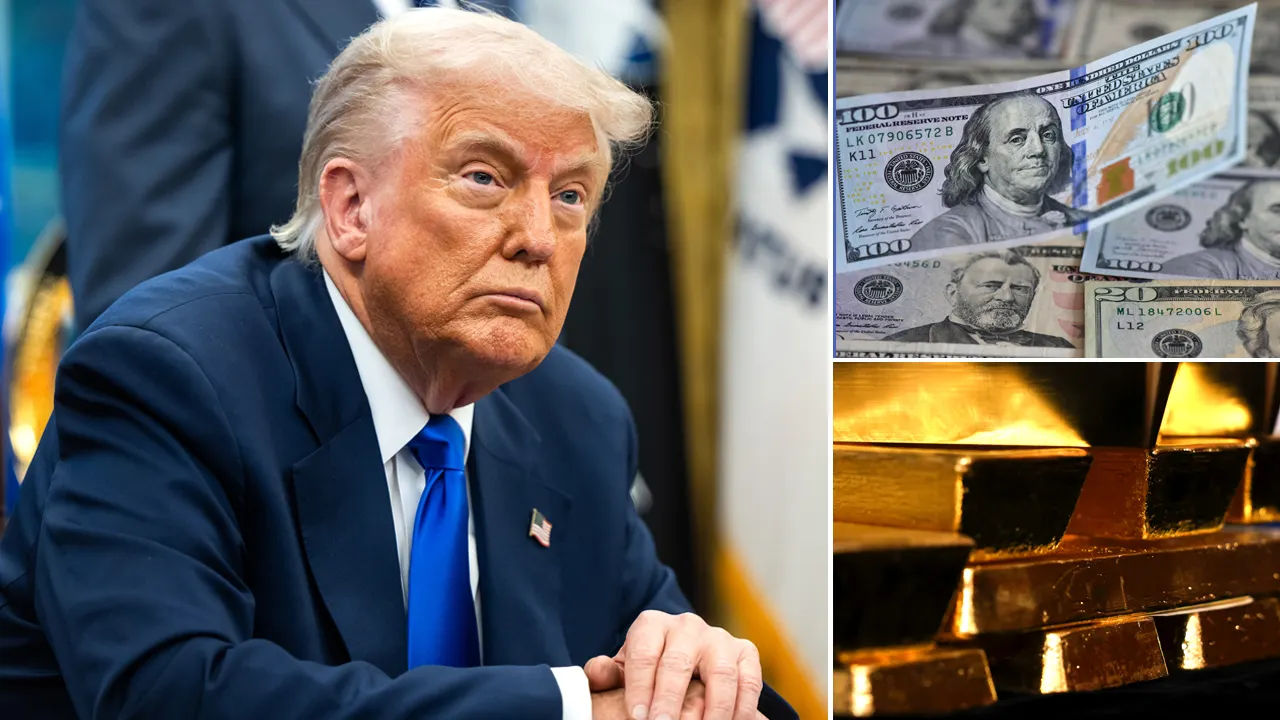
President Donald Trump has played down worries about the weakening U.S. dollar, saying the currency is performing “great” even as markets showed signs of concern.
Asked whether the recent fall in the dollar troubled him, Trump responded dismissively, pointing broadly to U.S. business activity but offering no specific evidence to support his view.
His comments were followed by notable market movements. The euro rose above 1.20 dollars, while gold strengthened sharply against the U.S. currency, reaching an all-time high.
Trump cited China and Japan as examples of countries he has previously accused of pursuing currency devaluation. “I used to fight like hell with them,” he said, referring to what he described as efforts to weaken their currencies.
Economists suggest that current exchange-rate shifts reflect contrasting economic conditions and monetary policy choices, rather than deliberate devaluation.
The president has long argued that a weaker dollar can benefit the U.S. economy by supporting exports and encouraging foreign demand. He has also said that an excessively strong dollar could deter tourists and make it harder for American businesses to compete internationally.
However, Trump has acknowledged the trade-off involved, noting that a strong currency can help contain inflation. While a softer dollar may stimulate growth in the short term, analysts warn that sustained weakness can increase the cost of imports, fuel inflation and raise the price of foreign travel for U.S. consumers.