UN High Commissioner for Refugees, Filippo Grandi, has voiced grave concern that the Rapid Support Forces’ (RSF) continued territorial gains in Sudan could unleash another mass exodus of civilians across the region.
Speaking from Port Sudan, Grandi said the RSF’s capture of al-Fashir in October—a critical stronghold in Darfur—had been a turning point in the year-long conflict. Their recent push through Kordofan, including the seizure of Sudan’s largest oil field, has raised fears for the safety of civilians trapped between warring sides.
Although most people displaced in the latest violence have remained within Kordofan, Grandi warned that this may change if the frontlines shift towards major cities such as El Obeid. “If that city were to be engulfed by the war, I am pretty sure we would see more exodus,” he said, urging neighbouring states to prepare for the possibility.
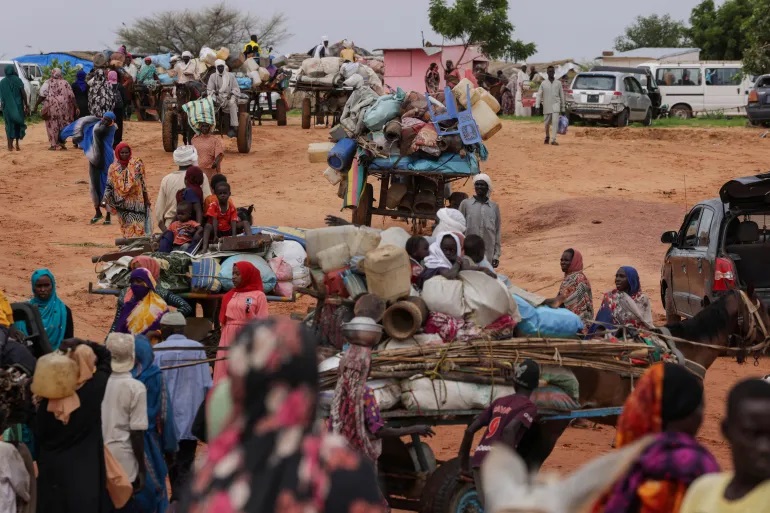
The conflict has already uprooted almost 12 million people—4.3 million of whom have fled Sudan altogether—creating the world’s largest displacement crisis. Some displaced families, however, have begun returning to Khartoum, now back under army control.
Grandi, who recently visited survivors from al-Fashir, said humanitarian workers lacked the resources to respond adequately. “We are barely responding,” he admitted, noting that the Sudan response plan remained only one-third funded following cuts by Western donors.
He described harrowing accounts from women and children who had walked hundreds of kilometres to reach al-Dabba camp on the Nile. Many had lost husbands and sons to killings or forced recruitment, while some mothers reported disguising their sons as girls to protect them from abduction by armed groups.
“Even fleeing is difficult because militias continuously stop people along the way,” Grandi said.
Reflecting on his early years with the UNHCR in the 1980s, he noted the painful irony that Sudan—once a refuge for people fleeing neighbouring wars—has now become the epicentre of Africa’s largest humanitarian displacement.