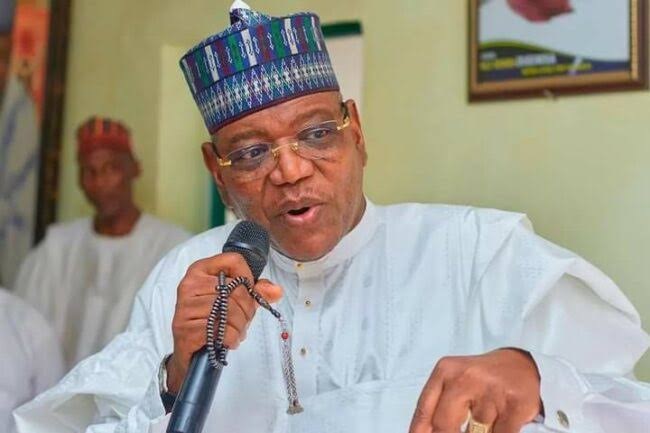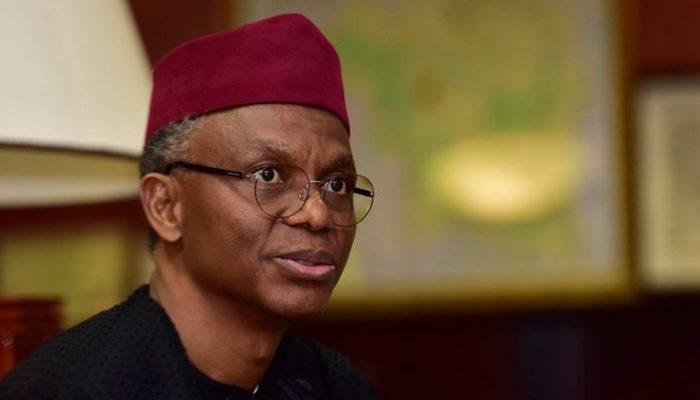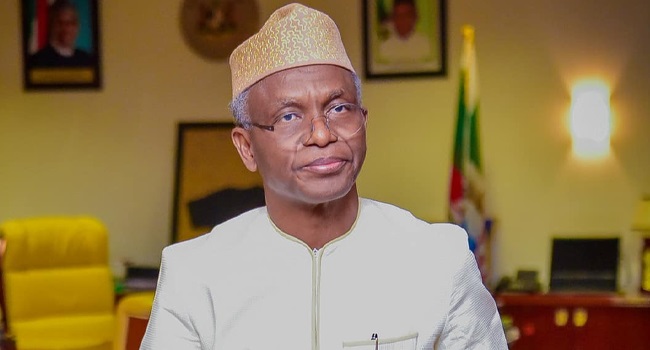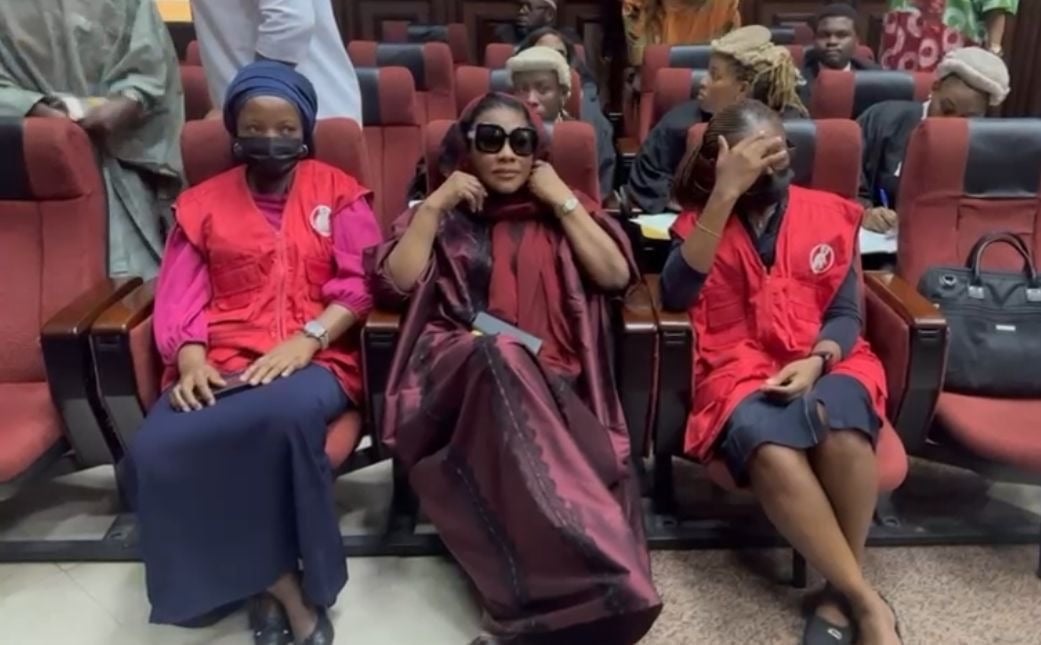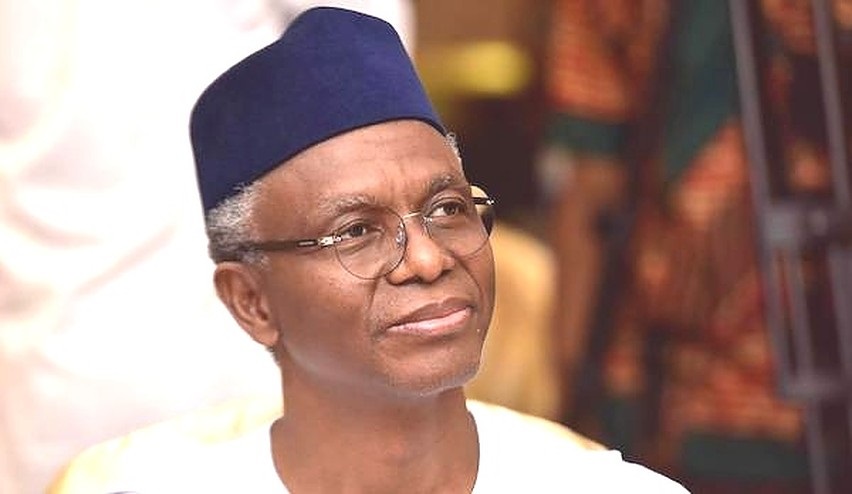
The ongoing investigation of former Gov. Nasir El-Rufai of Kaduna State by the Independent Corrupt Practices and Other Related Offences Commission (ICPC), on Wednesday, stalled his arraignment by the Department of State Services (DSS).
El-Rufai’s arraignment, which was scheduled for today before Justice Joyce Abdulmalik of the Federal High Court in Abuja could not go on due to the absence of the former governor in court.
When the matter was called, DSS lawyer, Oluwole Aladedoye, SAN, informed the court that though the matter was scheduled for the defendant to take his plea, he was yet to be released to them by the sister agency.
“The matter is supposed to be for arraignment today my lord. Unfortunately, the defendant is in the custody of the ICPC and we won’t be able to proceed,” he said..
Aladedoye said he already had a discussion with the counsel for the ex-governor and had agreed to come another date.
“But I don’t know how long the investigation at the ICPC will last. If we can have a date by March 10 my lord,” he said.
Responding, Oluwole Iyamu, SAN, who confirmed Aladedoye’s submission, however, said that the prosecuting lawyer was silent on the issue of bail for his client.
Iyamu said Aladedoye had assured him that the DSS would not be opposing to their bail application.
Aladedoye stated that though the security outfit will not raise objection to the defendant’s bail plea, the issue of bail could only be brought upon his arraignment.
Iyamu, however, disagreed with Aladedoye’s submission, insisting that El-Rufai’s bail application can be taken before arraignment.
The lawyer, who cited Section 158 of the Administration of Criminal Justice Act (ACJA), 2015, said El-Rufai can be admitted to bail since the DSS had already filed a charge against his client.
Besides, he submitted that ICPC that is holding the former governor is a sister agency to the DSS.
He alleged that the failure of the anti-corruption commission to release him was a ploy to delay the bail application.
“It amounts to oppressive act if they feel the application should be after the investigation because they (the DSS) took him there,” Iyamu further alleged.
He restated that the court could graciously admit the defendant to bail.
Aladedoye, however, corrected Iyamu ‘s impression that the DSS handed over El-Rufai to the ICPC.
“My lord, may I correct the impression that we (DSS) took the defendant there (ICPC). The defendant was taken custody by the EFCC and later arrested by ICPC. So what was our involvement?” he asked.
He argued that it was premature to discuss issues of El-Rufai’s bail now because he was not in their custody.
“Again, assuming the defendant took plea and admitted committing the offence, are we going to be talking about bail?
“Secondly Section 158 is totally irrelevant at this stage as he is not in our custody.
“It would have been different if the defendant was to be in custody of DSS.
“Then, my lord would have ordered for his production but we don’t have control over the sister agency,” Aladedoye said.
Responding, Iyamu, while citing Section 159 of ACJA, said the provision equally gives the court the power to order El-Rufai to be produced by ICPC, the charge, having been filed since Feb. 3.
“We apply that in the event my lord is minded to grant their application, we can come tomorrow.
“Whether the defendant will plead guilty or so is speculative.
“So we urge your lordship to take our application for bail but if your lordship in your unfettered discretion feels otherwise, we can come back tomorrow,” he prayed.
Justice Abdulmalik, who refused to grant Iyamu ‘s application, agreed with Aladedoye’s argument that the bail application was premature.
She said he had carefully studied Section 158 cited by Iyamu on issues of bail generally.
According to the judge, in this circumstance where the defendant has not been arraigned on this matter, the court is ceased to go into the application.
Justice Abdulmalik subsequently adjourned the matter until April 23 for arraignment.
The News Agency of Nigeria (NAN) earlier reported that the judge fixed Feb. 25 for El-Rufai’s arraignment after the Chief Judge, Justice John Tsoho, assigned the case to her.
The DSS had filed a three-count criminal charge, marked: FHC/ABJ/CR/99/2026, against El-Rufai following his alleged involvement in wiretapping the telephone lines of the National Security Adviser (NSA), Mallam Ngpfvuhu Ribadu.
The service accused El-Rufai of breaching the Cybercrimes Prohibition Act, (2024), and the Nigerian Communications Act (2003.)
In count on, El Rufai was alleged to have, on Feb. 13, while appearing as a guest on Arise TV station’s Prime Time Programme in Abuja, did admit during the interview that he and his cohorts unlawfully intercepted the phone communications of the NSA, Mr Ribadu.
The offence is said to be contrary to and punishable under Section 12(1) of the Cybercrimes (Prohibition, Prevention, etc) Amendment, Act, 2024.
In count two, the ex-governor was alleged to have, on Feb. 13, while appearing as a guest on Arise TV station’s Prime Time Programme in Abuja, did state during the interview that he knew and related with certain individual, who unlawfully intercepted the phone communications of NSA, without reporting the said individual to relevant security agencies.
The offence is said to be contrary to and punishable under Section 27 (b) of the Cybercrimes (Prohibition, Prevention, etc) Amendment, Act, 2024.
Count three alleged that El Rufai and others still at large, sometime in 2026, in Abuja, did use technical equipment or systems which compromised public safety, national security and instilling reasonable apprehension of insecurity among Nigerians by unlawfully intercepting NSA’s phone communications.
.
The act, which the DSS said, the ex-governor admitted during an interview on Feb. 13th on Arise TV station’s Prime Time Programme in Abuja “and thereby committed an offence contrary to and punishable under Section 131(2) Nigerian Communications Act 2003.”
NAN recalls that El-Rufai had, during a live interview on the TV station, claimed he overheard Mr Ribadu directing security operatives to detain him, linking the alleged directive to an attempted arrest at the Nnamdi Azikiwe International Airport on Feb. 12 after his return from Cairo, Egypt.