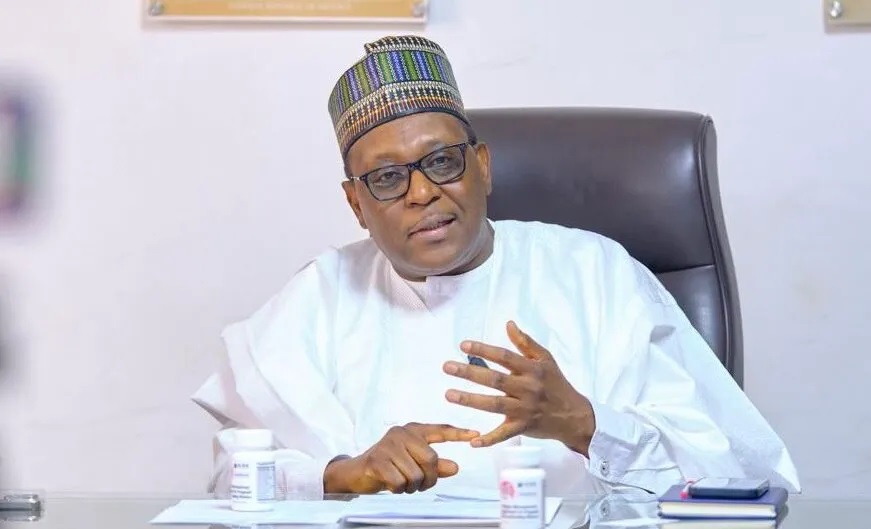
The head of Nigeria’s National Population Commission (NPC), Aminu Yusuf, has revealed plans to introduce a Population Trust Fund designed to prevent the funding shortfalls that have long undermined the country’s census timetable.
Yusuf made the announcement in Abuja at the 13th Annual Population Lecture Series (APLS), which examined the impact of tightening global aid flows on population programmes and emphasised the need for fresh domestic resource strategies.
He said censuses should be held every ten years, noting that a dedicated fund would enable Nigeria to meet international standards by ensuring predictable financing and efficient preparation. According to Yusuf, the proposal forms part of a broader agenda to enhance the commission’s operational independence and dependability.
He emphasised that waning global development assistance had made domestic resource mobilisation indispensable, urging Nigeria to take primary responsibility for financing core population initiatives such as health, education and national data management.
Planned Parenthood Federation of Nigeria (PPFN) President, Kwamoti Laori, represented by Executive Director Dr Haruna Aku, said reduced donor support was already affecting reproductive health and maternal care services. He criticised the absence of a legal framework requiring regular censuses, which he argued had contributed to almost two decades without a national population count.
Laori cautioned that weak demographic data was exacerbating security challenges across the country, including persistent banditry and kidnapping.
Dr Aminu Magashi, founder of the Africa Health Budget Network (AHBN), said Nigeria must urgently prioritise demographic planning as the country is projected to reach 400 million inhabitants by 2050. With most citizens under the age of 30, he noted mounting pressures on key sectors such as education, healthcare and family planning, particularly given the low rate of contraceptive use.
He recommended that the government fully implement the National Population Policy, introduce dedicated budget lines for population and development, and secure consistent financial commitments at both federal and state levels. Magashi also urged policymakers to integrate demographic concerns into national security planning.
National Council of Women Societies (NCWS) President, Edna Azura, said robust funding for population programmes was critical for advancing maternal health, girls’ education, gender-based violence prevention and women’s economic empowerment. She called for enhanced domestic financing mechanisms, stronger public–private partnerships and greater community participation.
Azura reaffirmed NCWS support for the NPC’s efforts to improve demographic data quality and strengthen gender-sensitive planning.
Since its inception in 2012, the APLS has served as a high-level forum for policy discussions on Nigeria’s population dynamics and development priorities.