Security analysts have attributed the March 16 suicide bombings in Maiduguri to what they described as “intelligence congestion,” urging reforms to improve Nigeria’s counterterrorism response framework.
The analysts said the attacks underscored the need to shift from mere intelligence gathering to effective utilisation and timely operational response across security agencies.
In a policy analysis by Nextier researchers, Mr Joshua Biem and Dr Ndu Nwokolo said the attacks reflected systemic weaknesses in processing available intelligence.
They argued that the coordinated bombings were not due to lack of intelligence, but the inability to convert available data into actionable insights promptly.
“The issue is no longer the absence of intelligence but the inability to manage its abundance effectively,” the analysts said.
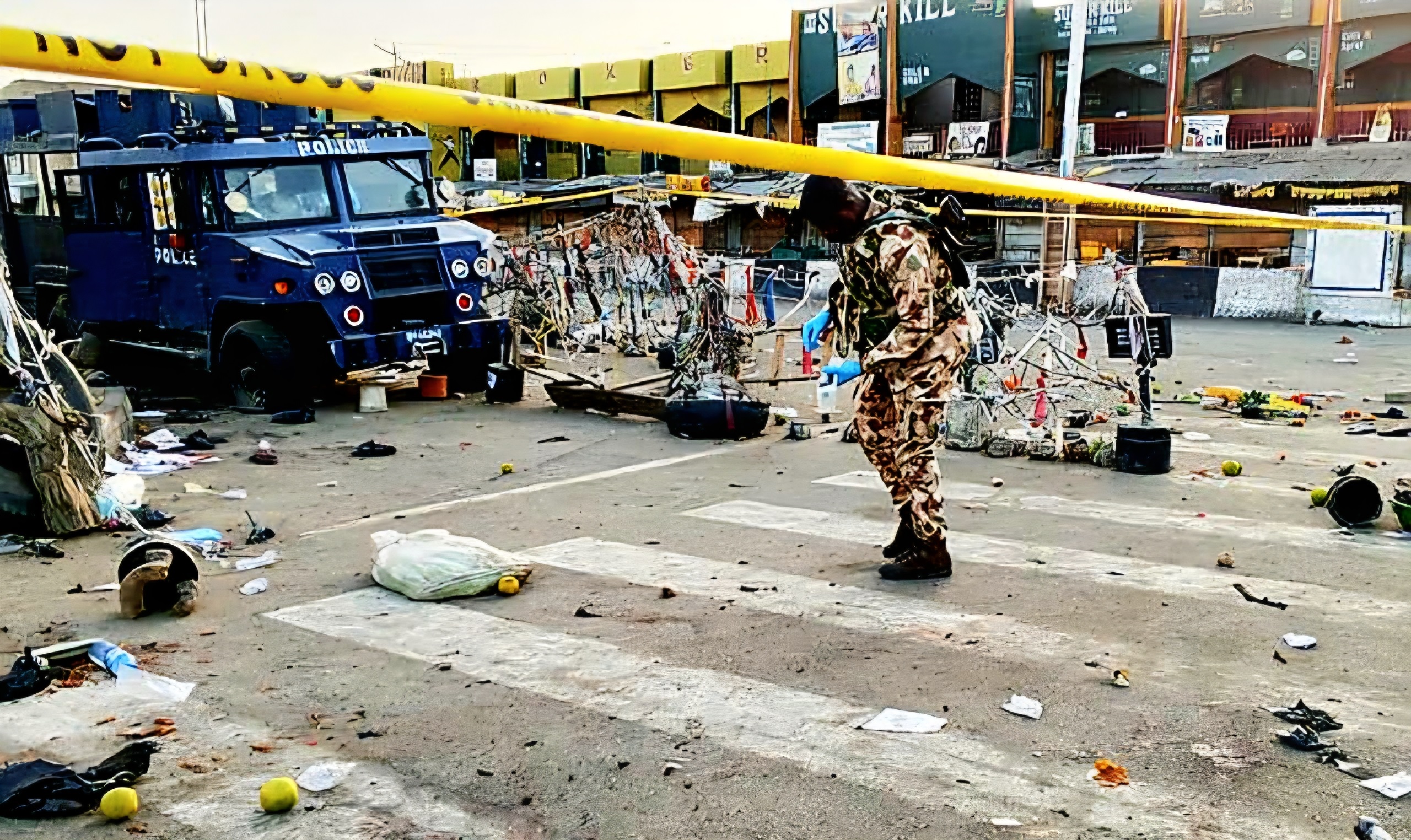
The bombings targeted the Monday Market, Post Office flyover, and the entrance of the University of Maiduguri Teaching Hospital.
Official figures indicated that at least 23 persons were killed, while more than 100 others sustained injuries during the coordinated attacks.
The incidents occurred during Ramadan fast-breaking hours, a timing analysts said amplified casualties and heightened psychological impact on affected communities.
According to the report, the attacks highlight deeper structural challenges within Nigeria’s intelligence architecture, particularly in conflict-prone regions such as Borno.
The analysts explained that conflict zones generate vast intelligence streams from human sources, patrols, telecommunications data, and community-based reports.
They noted that the sheer volume of fragmented information often leads to delays in identifying credible threats, a situation described as intelligence congestion.
Nigeria’s intelligence framework comprises agencies such as the Defence Intelligence Agency, National Intelligence Agency, and the Department of State Services.
Oversight responsibilities are coordinated through the Office of the National Security Adviser and the National Counter Terrorism Centre.
Despite these structures, the report identified a persistent gap between strategic coordination and real-time operational response, especially in densely populated urban environments.
The analysts also highlighted the complexity of Nigeria’s insurgency landscape, noting challenges in distinguishing between different armed groups operating in the North-East.
They cited factions such as Jama’atu Ahlis Sunna Lidda’awati wal-Jihad and Islamic State West Africa Province as examples of groups with differing operational patterns.
“While one group has historically targeted civilians, the other has largely focused on military installations in recent years,” the report noted.
The analysts said the resurgence of suicide bombings raised critical questions, especially as no group had claimed responsibility at the time of the analysis.
They further linked the attacks to broader global dynamics, including the influence of international conflicts on extremist narratives and recruitment patterns.
Although no direct operational ties were established, the report said global tensions could indirectly shape local insurgent activities and propaganda.
The analysts also identified the growing role of technology, particularly artificial intelligence, as both a tool and a challenge in counterterrorism efforts.
They said while AI enhances analytical capacity, it also contributes to information overload, complicating intelligence prioritisation and decision-making processes.
To address these challenges, the report recommended establishing location-specific intelligence fusion centres in high-risk urban areas across the country.
It also called for the adoption of AI-assisted tools to prioritise critical intelligence and improve the speed and accuracy of threat detection.
The analysts emphasised the need to strengthen community-based intelligence networks to support early warning systems and localised response strategies.
They further recommended integrating global geopolitical analysis into domestic threat assessments to better anticipate evolving security risks.
“The effectiveness of Nigeria’s counterterrorism strategy will depend on its ability to transform intelligence into a real-time instrument of public safety,” the analysts said.