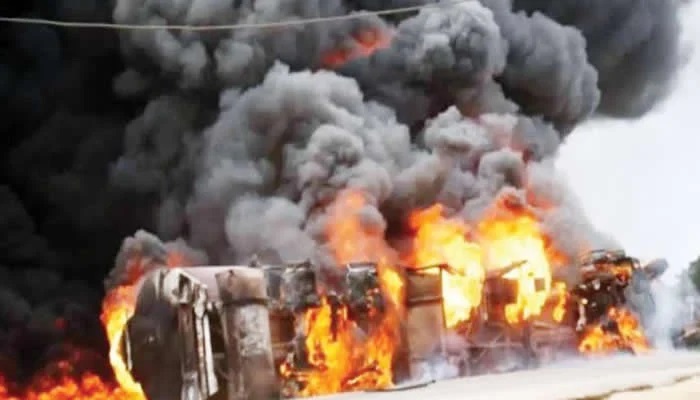
The Presidential Initiative on Compressed Natural Gas and Electric Vehicles (Pi-CNG & EV) has reassured the public on the safety of natural gas following a vehicle explosion at a Kaduna motor park early Sunday.
A statement signed by the Head, Brand and Communications Onyekachi Eke, Pi-CNG & EV, on behalf of Pi-CNG & EV management, called for calm as investigations proceed.
The incident which was reported in the early hours of Sunday at an unspecified motor park prompted a response from Pi-CNG & EV expressing deep concern and solidarity with those affected.
Eke highlighted years of incident-free CNG use in Nigeria, and emphasised its reliability, cost-effectiveness, and air quality benefits.
She said no cause had been confirmed yet, and it was working alongside state and Federal authorities to establish facts.
“At this time, there is no confirmed information on the specific cause of the incident, as investigations are ongoing.
“The Initiative is working closely with relevant state and federal authorities to establish the facts.
“We wish to reassure the public that natural gas, when properly handled and deployed, has a strong safety record both globally and within Nigeria, with years of use across parts of the country without incidents of this nature.
“CNG remains a safe, reliable, and cost-effective fuel option, with the added benefit of supporting cleaner energy and improved air quality.
“We urge the public to remain calm and avoid speculation or sensational reporting while investigations are ongoing,” Eke said.
She said the organisation remained fully committed to safety and would continue to work with all relevant stakeholders to ensure the highest standards across the sector.
She further cautioned against speculation or sensationalism during the probe and recommitted to top safety standards, while promising updates as details emerge.
Pi-CNG & EV was inaugurated in July 2023 by President Bola Tinubu to convert one million vehicles to CNG within three years.
It is leveraging Nigeria’s abundant gas reserves to cut transport costs by up to 70 per cent post-fuel subsidy removal.