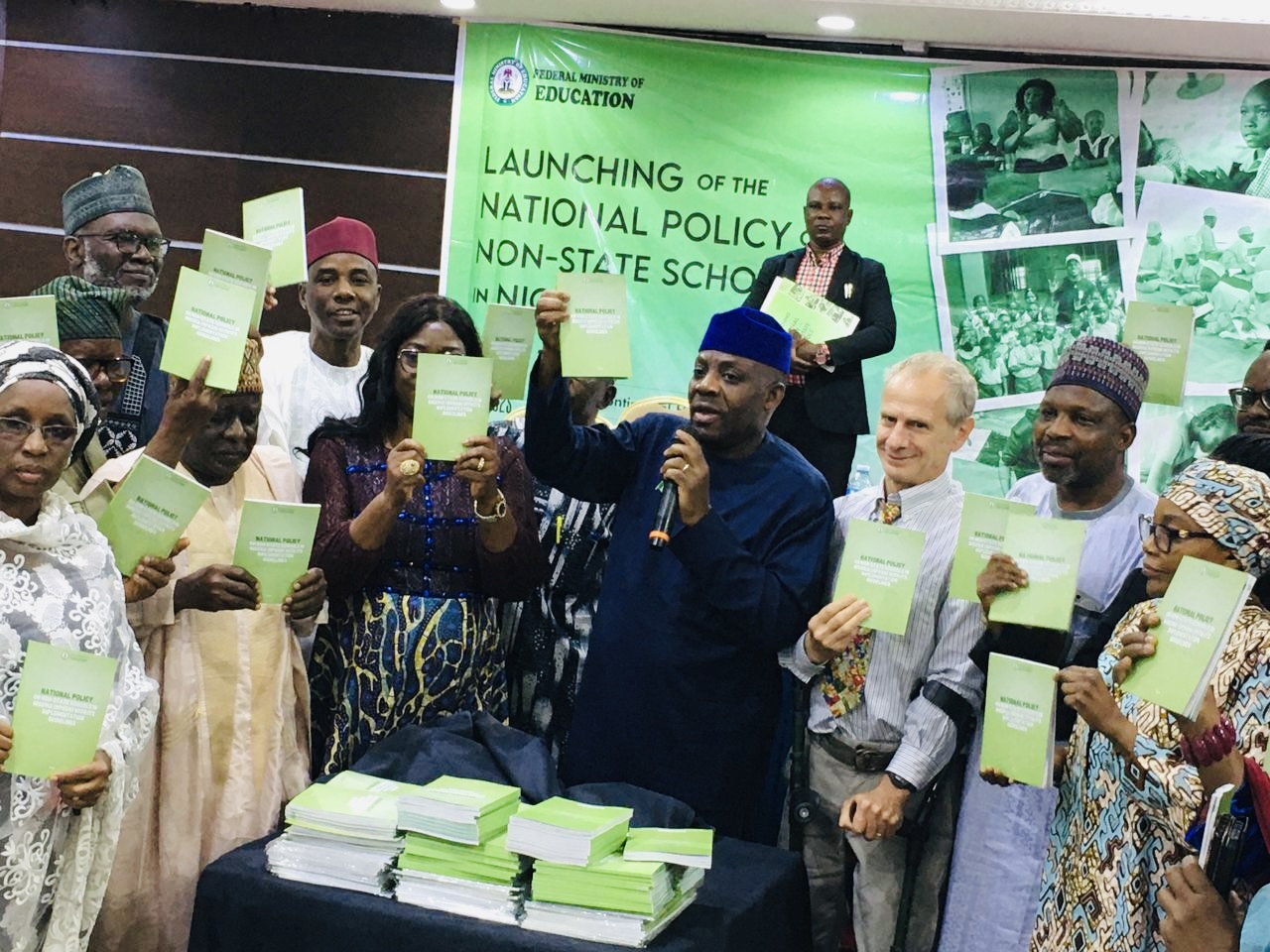
In a major move to enhance the nation’s education sector, the Federal Government on Monday launched three national education policies aimed at shifting focus from formulation to practical implementation. The unveiling took place in Abuja, with Education Minister Dr Tunji Alausa presenting the documents.
Alausa explained that the ministry had embraced an 80 per cent implementation and 20 per cent policy development approach, reflecting international best practices. “Nigeria’s education reforms must now produce measurable outcomes across all states,” he said, emphasising the importance of action over theory.
He acknowledged the support of development partners, including UNESCO and UNICEF, which have played a crucial role in advancing Nigeria’s education agenda. The minister said the new policies would strengthen areas covered by existing frameworks and fill gaps where policies were previously lacking.
“Policy is only a small part of the work; implementation is the core,” Alausa said. He noted that Commissioners for Education would lead execution in their respective states, supported technically and financially by the federal government.
The first policy, the National Teachers’ Policy, seeks to improve teacher quality, upgrade competencies, and promote professional development. Alausa said the government was accelerating the digitalisation of teacher training and would soon launch a platform for continuous professional development. Teachers in public schools would also be required to secure registration licences from the Teacher Registration Council.
The second policy addresses drug and substance abuse in schools, targeting secondary and tertiary institutions. “Addiction destroys lives, and we must protect our youth,” Alausa said. The policy includes counselling and behavioural support while prescribing sanctions for repeat offenders, reflecting a balanced approach to prevention and enforcement.
Speaking on behalf of the states, Dr Lawal Olorungbebe, Kwara Commissioner for Education and Human Capital Development, reaffirmed the commitment of state education commissioners to ensure proper execution. He noted that while policies originate at the federal level, their impact depends entirely on implementation. “We are committed to translating these policies into concrete results for all Nigerians,” he said.
The unveiling marks a significant step in Nigeria’s ongoing education reforms, signalling a move away from policy rhetoric towards action-oriented strategies designed to improve teacher quality, protect students, and enhance learning outcomes nationwide.