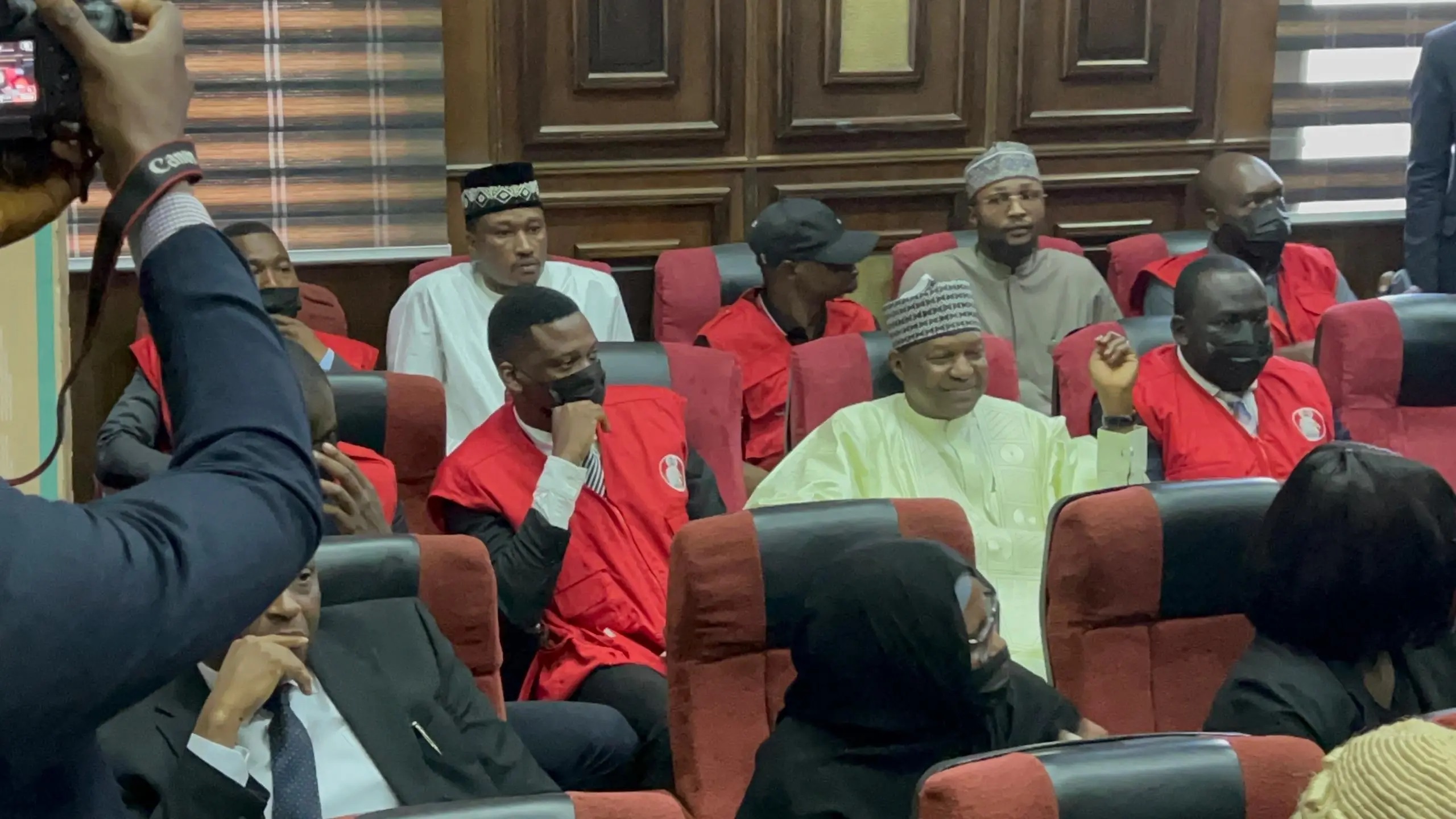
Former Attorney-General of the Federation, Abubakar Malami, SAN, has approached the Federal High Court in Abuja, seeking the discharge of an interim forfeiture order placed on three properties by the Economic and Financial Crimes Commission (EFCC).
The order forms part of a broader ruling made on 6 January, in which the court temporarily forfeited 57 properties suspected to be proceeds of unlawful activities allegedly linked to Malami.
In his application, Malami is contesting the forfeiture of properties listed as Nos. 9, 18 and 48 in the schedule attached to the EFCC’s ex-parte motion.
The affected assets include a property at Lamido Crescent, Nasarawa GRA, Kano; a residential duplex with boys’ quarters in Wuse II, Abuja, purchased for N150 million; and the ADC Kadi Malami Foundation Building, acquired for N56 million.
Justice Nwite, who granted the interim forfeiture order while sitting as a vacation judge, also directed the EFCC to publish the ruling in a national newspaper to allow interested parties to contest the forfeiture within 14 days.
According to NAN, the properties involved are located in Abuja, Kebbi, Kano and Kaduna States and are collectively valued at several billions of naira.
Malami, through his counsel, Joseph Daudu, SAN, alleged that the EFCC obtained the interim order by suppressing material facts and misleading the court.
In the motion on notice marked FHC/ABJ/CS/20/2026, Malami asked the court to vacate the forfeiture order in respect of the three properties, arguing that they were lawfully acquired and duly declared in his asset declaration forms submitted to the Code of Conduct Bureau.
He also sought an order restraining the EFCC from interfering with his ownership, possession and control of the properties.
Daudu argued that there was no prima facie evidence linking the assets to any unlawful activity, adding that properties Nos. 9 and 18 were declared in Malami’s 2019 and 2023 asset filings, while property No. 48 was held in trust for the estate of his late father.
The senior lawyer said Malami’s declared income sources included salaries and allowances, business proceeds, loans to businesses, gifts from friends and income from the launch of his book on Nigerian legal practice.
He maintained that the interim forfeiture order was based on exaggerated and improperly valued asset figures, which unfairly influenced the court’s discretion.
According to Daudu, the forfeiture proceedings violated Malami’s constitutional rights, including his right to property and the presumption of innocence, and should therefore be struck out to prevent duplicative litigation.
NAN reports that the matter was adjourned after it failed to appear on the court’s cause list on 27 January, following the end of the court’s vacation session and the reassignment of the case.
Malami is currently facing money laundering charges brought by the EFCC and is also being held by the Department of State Services (DSS) over a separate allegation relating to terrorism financing.