The Indian Army’s General Officer Commanding (GOC), 31 Armoured Division, Maj.-Gen. Mandeep Singh, said any army must be technologically enabled and self-reliant.
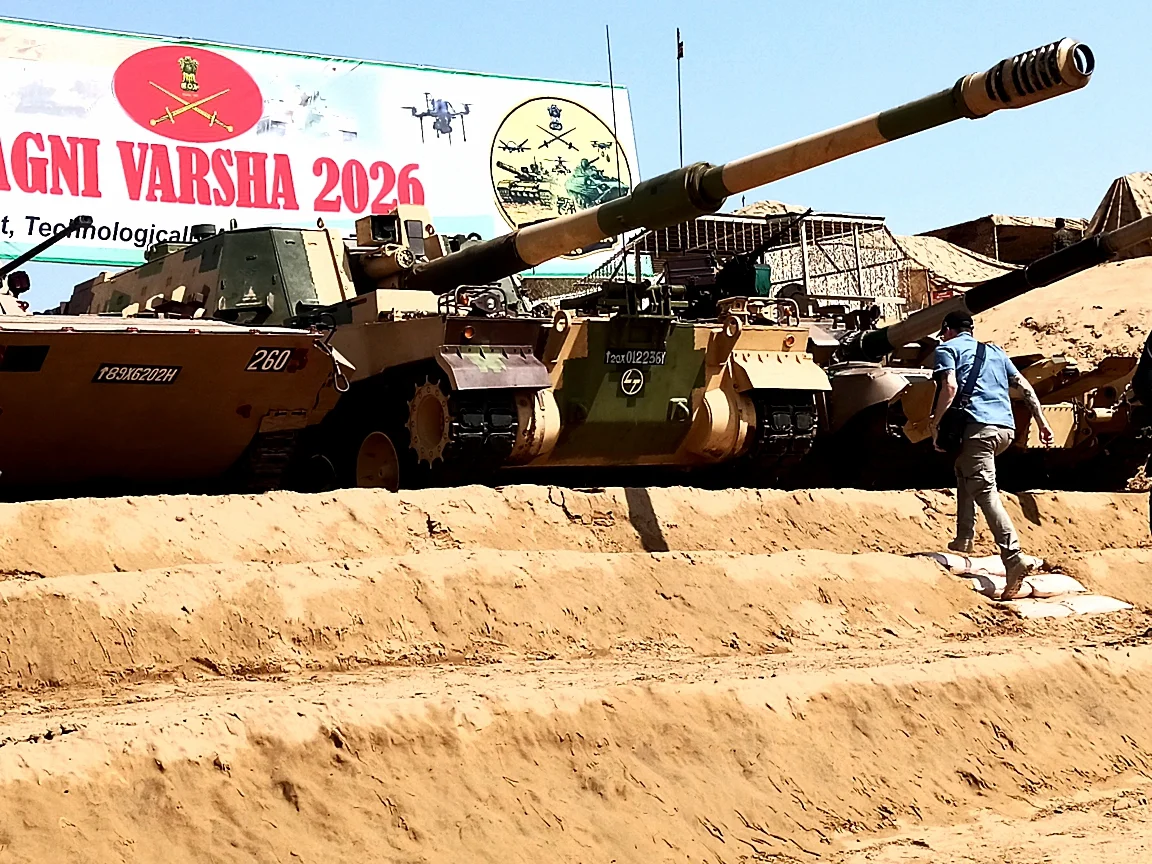
He made the remarks during a high-intensity integrated manoeuvre exercise at the Pokhran Field Firing Range in Rajasthan.
Singh explained that modern battlefields were increasingly complex, requiring agile, networked forces capable of operating across multiple domains.
He told journalists, “The Indian Army is fully equipped, energised, technologically enabled, and future-ready to meet any challenge.”
He added, “Any army that seeks to prevail in future conflicts must be self-reliant, technologically capable, and able to operate seamlessly with partners while safeguarding national interests.”
Singh noted the live exercise demonstrated only a fraction of the army’s combat potential.
According to him, the manoeuvre integrated tanks, infantry combat vehicles, long-range artillery, rockets, and air defence systems, supported by advanced software-driven intelligence and electronic warfare capabilities.
He said multiple such forces would operate simultaneously in real combat conditions, often at night.
Singh highlighted the army’s doctrine emphasises persistent surveillance, precision strike, and coordinated manoeuvre using real-time data from satellites, UAVs, and ground sensors.
He explained the sequence of surveillance, precision engagement, and air defence was validated during Operation Sindur.
“Our aim was to deliver justice, not revenge. Escalation was controlled at every level, and objectives were achieved before the operation ended,” Singh said.
He noted the Pokhran demonstration was in daylight for public understanding, whereas real operations are typically conducted at night.
He further underscored the Army’s growing focus on jointness with Navy and Air Force operations, synchronised in battlefield scenarios.
The exercise showcased advances in speed, precision, protection, and decisive firepower, reflecting the changing dynamics of modern conflict.
Observers noted that contemporary warfare now involves cyber disruption, misinformation campaigns, drones, missiles, air power, and mechanised forces.
The exercise oriented participants to desert landmarks simulating enemy forward defences and depth positions.
The demonstration integrated intelligence, surveillance, and reconnaissance (ISR) assets with long-range precision strike systems, creating a fully activated “kill chain.”
ISR included military satellites capable of persistent monitoring and UAVs flying up to 25,000 feet, with data transmitted directly for rapid decision-making.
A major highlight was the introduction of newly raised Bhairav battalions, specialised commando units trained in rapid-response missions, close combat, precision shooting, and advanced battlefield skills.
The units reflect India’s push toward Atmanirbhar, or self-reliance, emphasising indigenous technology and readiness to counter emerging threats on modern battlefields.