Across the vast, diverse agricultural landscape of Nigeria, a much-needed transformation is taking place. From a national perspective, the challenge has always been one of scale and connectivity.
Nigeria’s agricultural sector contributes significantly to its GDP, yet it has long been plagued by a massive extension gap. Nationally, the ratio of extension agents to farm families is critically high, often estimated at one agent to every ten thousand farmers.
This creates a last-mile vague where vital information on climate-smart practices, improved seed varieties, and modern market linkages fail to reach the millions of smallholders who feed the nation.
To bridge this gap, the Nigerian government and its partners have leaned into the Nigeria Digital Agriculture Strategy and the National Agricultural Extension Policy.
These frameworks aim to move away from a purely public-funded, top-down approach toward a market-led ecosystem. The vision is to institutionalize a system where private sector efficiency meets public sector research, creating a sustainable network that doesn’t collapse when project funding ends.
Nowhere is this national strategy being more aggressively and successfully localized than in Kaduna State. With a population of nine million people and eighty percent of its workforce engaged in agriculture, the stakes are immense.
However, the state faced the same national bottleneck: a 1 to 10,000 extension ratio and a literacy level that made purely digital interventions, such as apps or SMS-only advisory, ineffective for the seventy-three percent of farmers who use basic phones without internet.
The solution emerged in the form of the Human API—the Community-Based Advisor (CBA). In Kaduna, the CBA 2.0 initiative has successfully narrowed the focus to the local government level, training 926 advisors across eighteen LGAs.
These advisors are not just conduits for information; they are trusted local entrepreneurs. By narrowing the focus from national policy to community reality, the project has turned a public service gap into a private sector opportunity.
This shift was driven by a powerful consortium led by AGRA, in partnership with Extension Africa (EXAF) and NAERLS, aimed at transforming extension from a traditional service into core rural infrastructure. Under this model, AGRA and EXAF have professionalized the role of the advisor, moving away from project-bound stipends toward a system of market-driven income.
Today, these “Human APIs” earn commissions by linking farmers to critical services from partners like Syngenta, Olam, and Sterling Bank, ensuring the network remains viable long after the initial intervention ends.
The old philosophy of extension was rooted in government-led, free-of-charge advisory. While noble, it was often unsustainable and infrequently reached the “last mile.” The CBA model treats extension not as a handout, but as a market-led business.
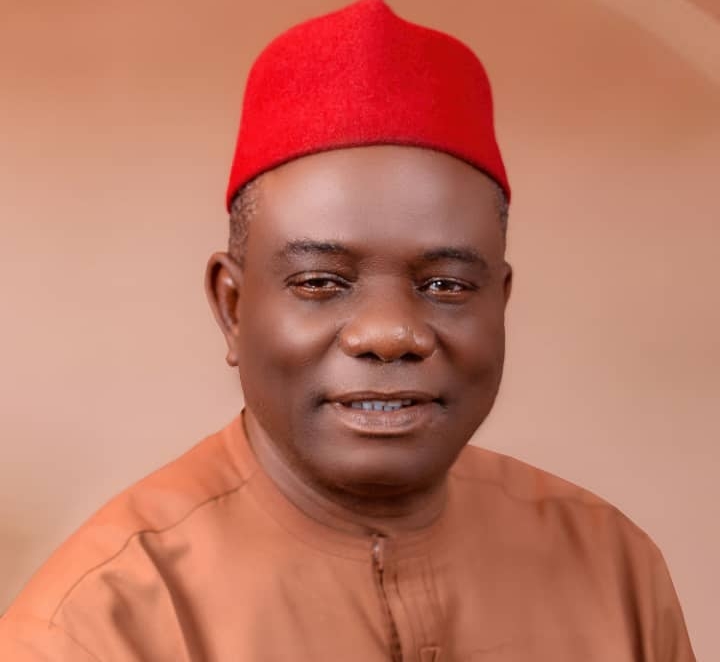
“The CBA model was conceived to solve a lingering problem in the Nigerian system,” explains Abdul Samad Isah, COO of Extension Africa. “We are looking at it from a business perspective. The agent can multitask, providing input market linkages and financial services alongside technical advisory.”
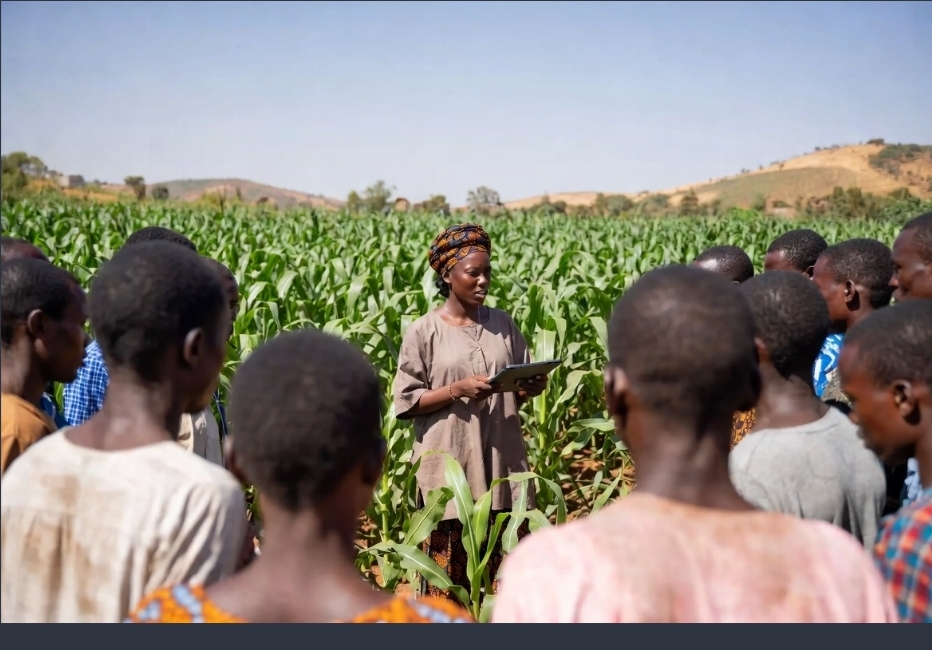
This “market-led” approach ensures that advisors like Fatima Ahmed, a CBA in Kaduna, are not just volunteers, but entrepreneurs. Initially met with skepticism from male farmers, Fatima’s success in increasing yields has turned laughter into leadership.
Reflecting on her journey, Fatima notes, “When I started, the men laughed and asked what a woman could know about farming. Today, they are the ones lining up at my door because they have seen their harvests double; I am no longer just a neighbor to them, I am the business partner who helps them succeed.”
Today, nearly 40% of these advisors are women, proving that when extension becomes a livelihood, it becomes permanent.
The “2.0” in the initiative’s title refers to a critical evolution: the digital integration of the human agent. While there are over 100 technology solutions in Nigeria aiming to solve agricultural hurdles via apps and SMS, they often hit a wall of low digital literacy or poor connectivity.
By equipping advisors with tablets and digital tools, the project translates complex data into “practical and content-specific actions,” as noted by Professor Chris Daudu of NAERLS. The CBA becomes the human processor that makes the digital data digestible for the farmer.
The results of this hybrid approach of combining entrepreneurial grit with digital support are tangible. The narrative of success is built on clear outcomes: farmers connected to CBAs are seeing maize yields climb toward 4 to 6 tons, far outstripping the national average of 2 to 3 tons. By acting as agents for banks and input providers like Premier Seeds, CBAs ensure that quality is no longer a luxury reserved for large-scale commercial outfits.
Furthermore, the primary age group of these new advisors, mostly between 26 and 35 years old, reflects a youthful energy that brings vital tech-savviness to traditional farming communities.
Despite successes, challenges remain. Insecurity in parts of Kaduna has limited the reach of some agents, and the “digital divide” still claims a portion of potential advisors who struggle with device maintenance or literacy.
However, the vision of AGRA and its partners remain steadfast. The goal is to move from environmental change to behavioral change by institutionalizing the CBA model into national policy, turning a fragmented ecosystem into a streamlined network.
As the “CBAs 2.0” era gains momentum, the consortium has created a blueprint for regional scale, proving that the most effective way to implement national policy is to empower local agripreneurs who can bridge the gap between digital tools and smallholder realities.