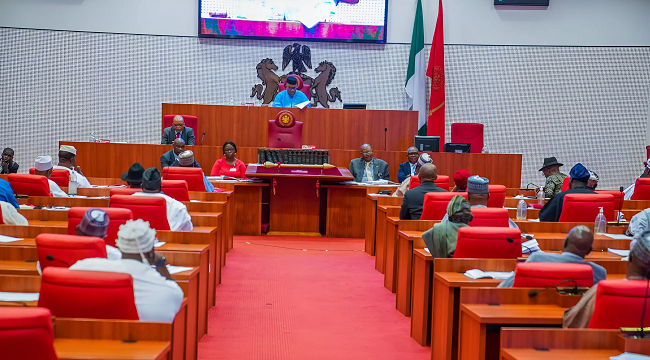
The Senate on Tuesday summoned the Minister of Education, Dr. Tunji Alausa, and the Head of the National Office of the West African Examinations Council (WAEC), Dr. Amos Dangut, to explain the controversial new guidelines introduced for candidates sitting for the 2025/2026 Senior Secondary Certificate Examination (SSCE).
The decision followed a motion by Senator Sunday Karimi (Kogi West), who warned that the sudden changes to subject requirements for SS3 students preparing for the May/June 2026 examination could trigger mass failure.
According to Karimi, WAEC directed that the new curriculum—originally slated for implementation in two years and meant for current SS1 students scheduled to take the exam in 2027/2028—be adopted immediately.
He noted that Computer Studies, Civic Education, and all previous trade subjects had been removed from the examination list, despite being taught for years. The removal leaves students with a maximum of six examinable subjects, contrary to WAEC’s requirement that candidates register for a minimum of eight and a maximum of nine subjects.
“This implies that each pupil will have between two to three new courses to be examined on next year, despite never offering these courses before and with little preparation,” Karimi said.
While acknowledging that the introduction of new trade subjects—such as Beauty and Cosmetology, Fashion Design, Livestock Farming, Computer Hardware and GSM Repairs, Solar Photovoltaic Installation, and Horticulture—is commendable, Karimi stressed that it was unrealistic to examine SS3 students on subjects they had never been taught.
Senators Fault Timing, Demand Exemption for Current SS3 Students
Lawmakers who contributed to the debate agreed that, although curriculum reform is necessary, the timing was insensitive and disruptive.
Senator Adams Oshiomhole (Edo North) questioned the readiness of schools to implement the changes.
“For a new subject to start, citizens must be well-informed. Do we have enough teachers? Have we prepared the laboratories? That evidence does not exist,” he said.
Senator Idiat Adebule (Lagos West), a former Commissioner of Education, called for an investigation into whether the National Council on Education—whose membership includes all state education commissioners—approved the changes.
Senator Adeola Olamilekan (Ogun West) stressed that students must be taught adequately before being examined.
“Students need to have prior knowledge of new subjects before they can be examined on them. The minister has some questions to answer,” he said.
Akpabio Questions Removal of Computer, Civic Education
Senate President Godswill Akpabio expressed concern over the removal of Computer Studies and Civic Education.
“Everything is going digital. So why are we removing computer studies? And civic education—our children need to know their civic obligations,” he said.
Akpabio also called for verification of the accuracy of the reported guidelines.
Committee to Report in Two Weeks
The Senate referred the matter to the Committee on Basic and Secondary Education and directed it to report back within two weeks.