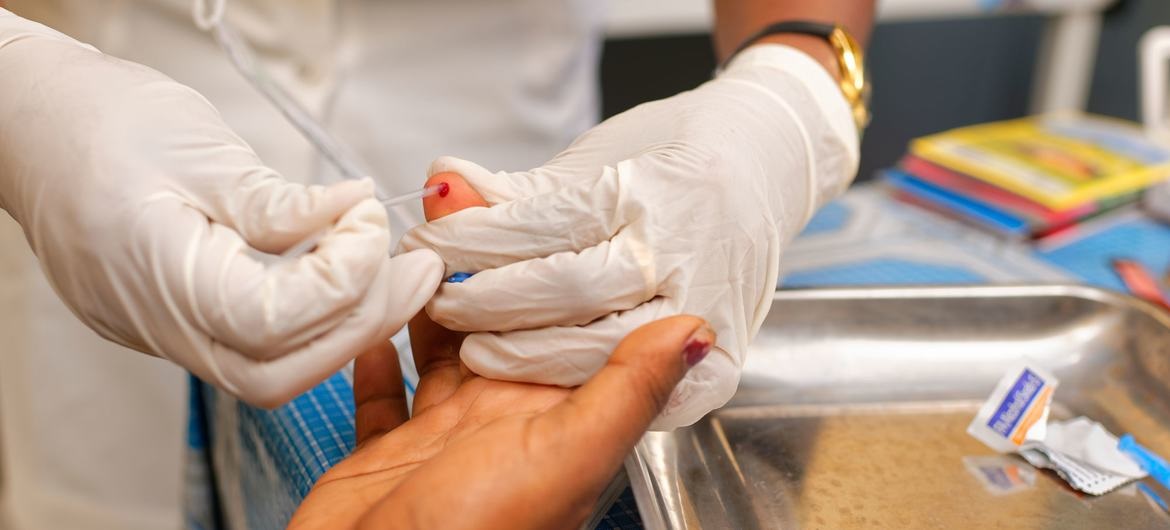
The United Nations Population Fund has sounded an alarm over what it describes as a dangerous unraveling of global HIV prevention efforts, warning that up to 3.3 million additional infections could occur by 2030 if current disruptions are not urgently addressed.
In a statement released on Monday to mark World AIDS Day 2025, UNFPA Executive Director Diene Keita said that cuts to international funding are severely weakening prevention systems in some of the world’s most vulnerable regions.
The theme for this year’s commemoration—“Overcoming disruption, transforming the AIDS response”—highlights the mounting strain placed on HIV programmes by declining resources, shifting political focus and widening economic pressures.
Keita said decades of progress were now “in jeopardy”, stressing that key services are failing to reach people most at risk. She noted that nearly 2.5 million individuals have already lost access to pre-exposure prophylaxis (PrEP), a crucial tool in reducing new infections.
Sub-Saharan Africa, which relies heavily on donor-funded interventions, has been particularly affected. UNFPA warned that women and girls aged 15 to 24 remain among the most vulnerable groups, accounting for one in four new infections in the region. Persistent gender inequality, stigma and violence continue to hinder their ability to seek and receive care.
Keita said the consequences extend beyond health, arguing that HIV fuels maternal deaths, restricts women’s autonomy and imposes lasting social and economic burdens. She added that prevention must be central to broader development and gender equality goals.
The UN agency emphasised the need for stronger domestic leadership, sustainable financing and policies that remove barriers to care. Keita called on governments to decriminalise same-sex relationships and sex work—measures she said would significantly improve access to prevention and treatment for key populations.
She also urged countries to integrate HIV services into existing sexual and reproductive health systems, including maternal and family planning care, to reach more women and girls efficiently.
Describing the global response as standing at a pivotal moment, Keita said the progress made so far—including saving an estimated 27 million lives—could be sustained only through continued investment in evidence-based strategies.
World AIDS Day, first marked in 1988, serves as an annual reminder of the shared responsibility to end AIDS as a public health threat. UNFPA said reversing current setbacks and strengthening prevention programmes will be critical to achieving that goal in the coming decade.